Instead of reading, you could also just listen …
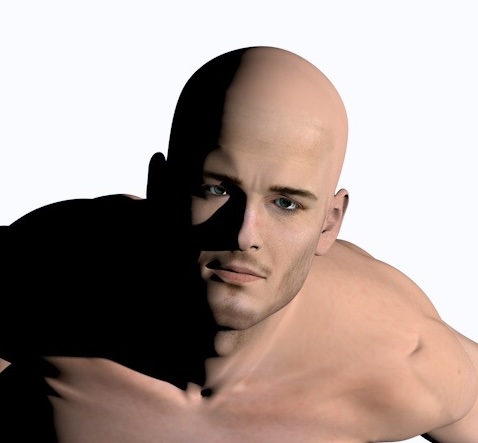
Being looked down upon triggers fear in us.
Why?
Because we feel overwhelmed, exposed and threatened by the person looking down upon us.
In this way, height plays a significant subconscious role in the interaction with the other person.
I am an average size person (at least in Germany) and one effect of my size is that I am far taller than most of my paediatric patients. So, when I walk up to them, they must look up to me when I stand.
How does it feel when you look up?
Have you ever looked up to someone? Although we consider this a position of admiration, it is also a position of intimidation.
If you are looked down upon, you will feel intimidated. The taller your counterpart is, the more overpowering this person appears, even when they stand at a “normal” distance. And in a situation, when someone seems to overpower us, we choose to either freeze or flee, rather than to cooperate.

This setting is what usually happens when an adult approaches a child. We are up here; they are down there. Connection doesn’t come naturally between these two worlds.
Different world: adult — child
The world of adult eye-level is separate from a child’s world. If adults speak among themselves (up there) the child has no part in it and might as well be invisible. When the child is spoken to from above (adult eye-level), this is experienced as distant and possibly as intimidating.
Different world: hospitals
Additionally to the general problem with heights, the doctor is extremely strange in the child’s experience. They are so different, from what children know, that this person might as well be an alien. The language is different, the posture, the reaction of the parent towards the medical specialist, this all shouts: I am way more than you, more in power and in control.
When the doctor, with an adult height, comes close or even enters the child’s “own” space, this is experienced as a clear sign of “predator” behaviour as was described in the previous post.
Therefore, approaching a child too close and talking to them from above is, in my understanding, detrimental to connection and cooperation, although this interaction is very common.

When in contrast, the doctor squats down, then the child and the doctor are talking “eye to eye” or “on the same level”.
On the page about “Respect” I am going to share my thoughts about how to tackle issues with height.
In a nutshell:
We need to adjust our height accordingly by crouching if we want to meet at eye level with children.
Communication lives on comments … fancy to share yours?