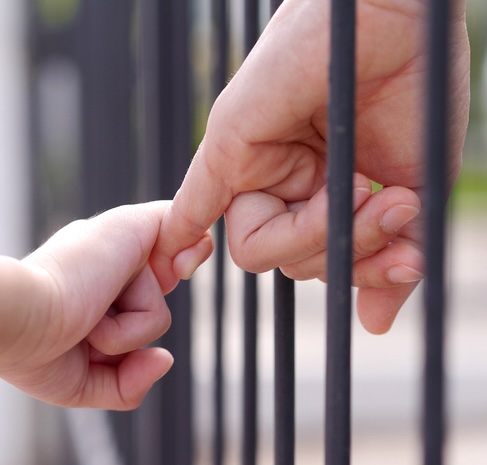
Connection and curiosity remove fear
In previous posts, I have already mentioned my nursery schoolteacher. She wanted to connect with me and made the effort to crouch down. She met me at eye level! Not only that, but she saw me! From that moment, I trusted her and felt safe in her presence.
We see, this is the power of a connection well established.
Why is connection so powerful?
Everybody needs to be seen. Everybody wants to have a status. Therefore, providing that to a child is quite a powerful approach to form a solid base for cooperation. This is the attitude and emotional status we aim for as doctors with our paediatric patients.
During my outpatient clinics, I greet every child in the waiting area by crunching down to their eye-level or even by making myself smaller than they are. The non-verbal messages I try to bring across are:
- I see you.
- I want to connect with you as equals.
- I am no threat.
The greeting of the child and the parent are an essential first non-verbal communication.
We need to establish connection and trigger curiosity to remove fear for a successful consultation.
How to do this?
The following are steps that I take to make it easy for the child to choose curiosity above fear:
- Make myself visible as a potential friend by smiling (of course).
This helps the child to choose to trust me. - Waving from a distance, kneeling and making eye contact offers the child the chance
to come towards me and
to control the distance of the first contact themselves. - Offering either a handshake or a “high-five” as a first physical contact.
- Respect the choice of the child to either to join my handshake or not.
I comment either with “Wow, you are brave” or with “That is OK, if you would rather not shake my hand now” depending on their choice.
The aim is to establish connection and trigger curiosity to remove fear for a successful consultation.
What are typical pitfalls?
At this delicate phase of the interaction, I avoid any body language that could be considered threatening:
- Insisting on coming close,
even when the child already turns the eyes or even the head away
or shows gestures to avoid contact. - Keeping looking (or even staring) down at the child from above.
- Invading their personal space, like insisting on physical contact (handshake)
whilst the child denies eye contact and hides behind the leg of their parent.
What about the parents?
Only after the first contact with the child is established, I then welcome the parents and introduce myself to them. They can wait, and when they see that their child is not frightened by me, they often sigh in relief.
I explain to the child what will happen further during the examination using words, that meet the child on the level of their vocabulary. I do this with the aim to trigger curiosity.
My standard sentences are:
- “I have something cool that I need to show you.”
- “I have a television where you can see your ear!”
- “So, I can show you your ear, your nose, and your mouth.”
- “And you and I together can show your Mummy/ Daddy your ears and your nose and your mouth.”
- “Shall we have a look together?”
As an ENT-specialist, tell them that they will see Ear-Nose- and Throat television with me. While I say that, I touch both ears, the nose, and the mouth of the child briefly so that they can entirely understand what I am talking about. This helps to gain the engagement and curiosity of the child. Once curiosity has been ignited, there is minimal need for persuasion into the examination room. In essence, this part of contact comes down to just telling the child what to expect next.
Here also, connection and curiosity remove fear.
What is the principle?
In essence, the approach to connecting with the child can be summarized as:
- The whole attention is orientated towards the young patient.
- The goal is to establish a positive semi-verbal contact.
- The parents relax when the interaction between doctor and child goes well.
As said before, we need to establish connection and trigger curiosity to remove fear for a successful consultation.
And then?
While we are still in the waiting room, the safe space, I explain to the child the structure of the consultation.
I let them know, that in the examination room we still start with the physical examination and that I will talk to their parents afterwards.
The parents listen in on my conversation with the child and this way, they are also informed and know now what to expect as next steps.
This short instruction helps them to cooperate during the consultation. With this outline, they know when there will be the time for them to tell their story.
Transition from safe to adventurous
By this stage, the child is curious and wants to come in and to see their body for themselves. With this preparation, the transition from the “safe” waiting room to the “dangerous” examination room is transformed from a threatening event into an adventure.
In a nutshell:
The process leads from establishing connection and triggering curiosity to remove fear for a successful consultation
Previous post Next post
Connect Respect Engage Extra tips Contact/About me
Communication lives on comments … fancy to share yours?